Polyester is a synthetic fibre widely used in both woven and knitted fabrics.
The fibre is known for its strength, shape retention and relatively easy-care properties.
Polyester can be made into a wide variety of fabrics, from lightweight, fluid qualities to
firm, technical or decorative fabrics. The final properties are strongly influenced by
the yarn, fabric construction, weight, finish and any fibre blends.
Fibre typeSynthetic fibre
Raw materialManufactured polymer
PropertiesStrong, shape-retaining and easy-care
ConstructionWoven and knitted fabrics
ApplicationsClothing, sportswear, interiors and technical textiles
✂
The fibre
What is polyester?
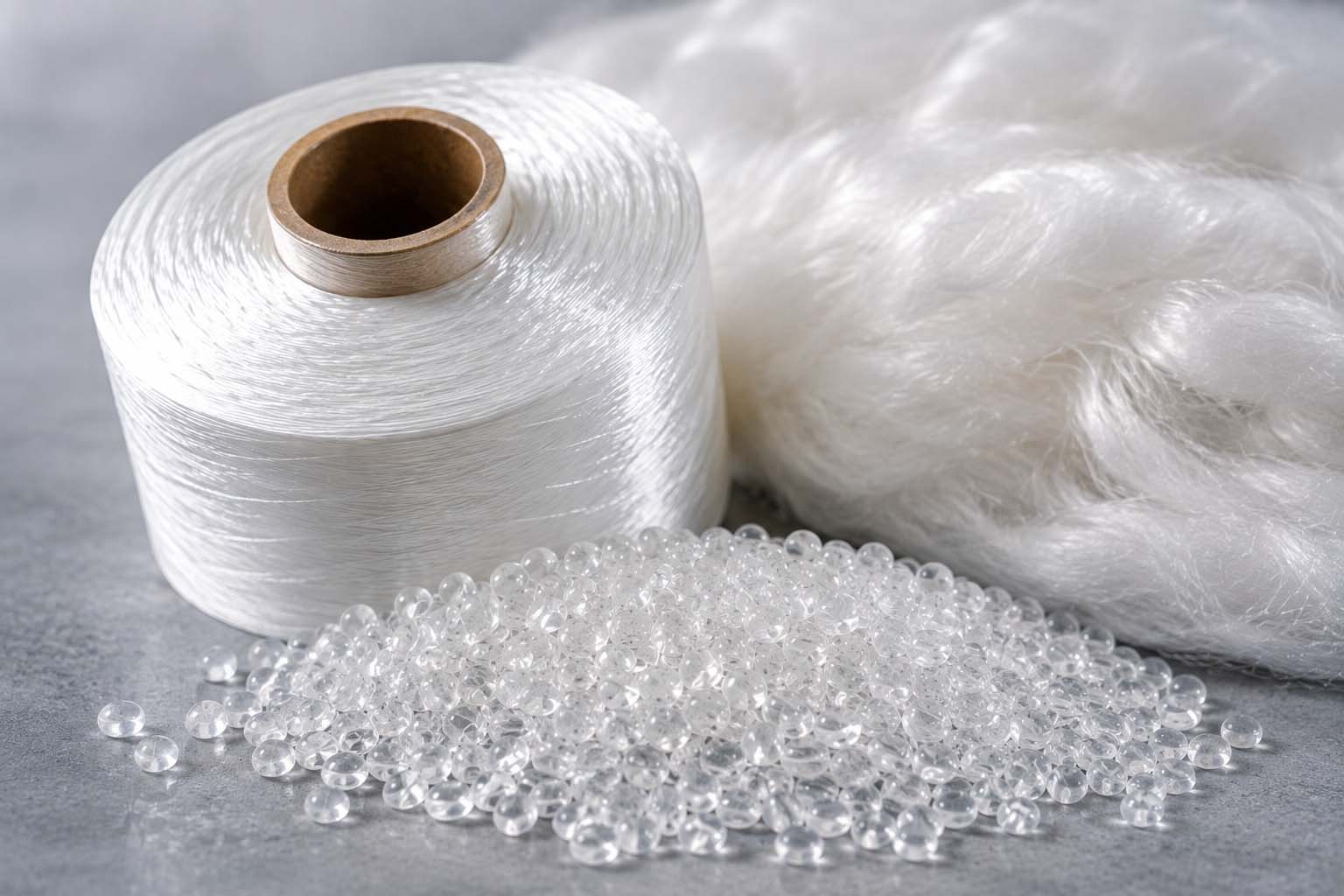
Polyester is a collective term for synthetic fibres made from polymers.
In textiles, PET-based polyester is particularly common. The raw material is processed
into filaments or fibres, which are then formed into yarns and can subsequently be
woven or knitted.
The term polyester therefore refers to the fibre used, but does not automatically describe
the finished fabric. Polyester chiffon, fleece, satin, jersey or upholstery fabric can
all be made from polyester, while structure, weight, stretch, sheen, drape and application
can differ considerably.
Why is polyester so versatile?
Polyester can be produced in different finenesses, yarn types and structures and
finished in many different ways. This makes the fibre suitable for lightweight
fashion fabrics as well as sports fabrics, linings, interior fabrics and technical applications.
Blends with other fibres are also common to combine different properties.
Variations by quality
Possible variations
Yarn typeFilament, staple fibre or textured yarn
StructureFrom smooth and fine to soft and voluminous
Composition100% polyester or blended with other fibres
FinishCan vary considerably between polyester fabrics
Important: polyester is the fibre, not the finished fabric construction.
Two fabrics that are both made from 100% polyester can differ considerably in weight,
structure, stretch, sheen, drape, moisture behaviour and application.
Use and selection
What is polyester used for?
Clothing & fashion
For dresses, blouses, trousers, jackets, skirts, linings and other garments,
depending on the fabric construction and finish.
Sports & activewear
Many polyester qualities are used for sportswear and functional textiles because of their
strength, shape retention and the possibility of adding moisture-management properties.
Interiors
Suitable for curtains, decorative fabrics, upholstery fabrics and cushions when the
specific quality has been developed for that purpose.
Technical & practical textiles
Polyester is widely used in outdoor, functional and technical fabrics when
durability, dimensional stability or easy care are important.
Selection advice: do not look only at the fibre percentage when choosing polyester.
Also consider fabric construction, weight, density, stretch, sheen, drape and finish.
Together, these properties determine what a particular quality is best suited to.
Care
Care instructions
Pre-washingUsually less critical than with cotton, but always follow the product care instructions
WashingWash according to the care instructions for the selected polyester quality
DryingMany polyester fabrics dry relatively quickly; always follow the product care instructions
BleachingOnly when permitted by the specific product care instructions
Good to know
Sewing and selecting
Shrinkage
Polyester generally shrinks less than many natural fibres, but construction,
heat and finish can influence the individual product.
Heat
Polyester is sensitive to high temperatures. When ironing, pressing and drying,
follow the product care instructions and test on a scrap first if necessary.
Sewing
Choose the needle, thread and stitch length according to the actual fabric construction.
A fine polyester chiffon requires different settings from a heavy polyester canvas.
Static charge
Some polyester fabrics can develop static, especially in dry conditions.
This varies according to construction, finish and application.
Moisture behaviour
Polyester naturally absorbs little moisture. Fabric construction and technical
finishes can, however, strongly influence moisture transport.
Product selection
Always compare composition, construction, weight, width, stretch, drape,
sheen, finish and care instructions for each individual polyester quality.
Alternatives
Comparable fibres
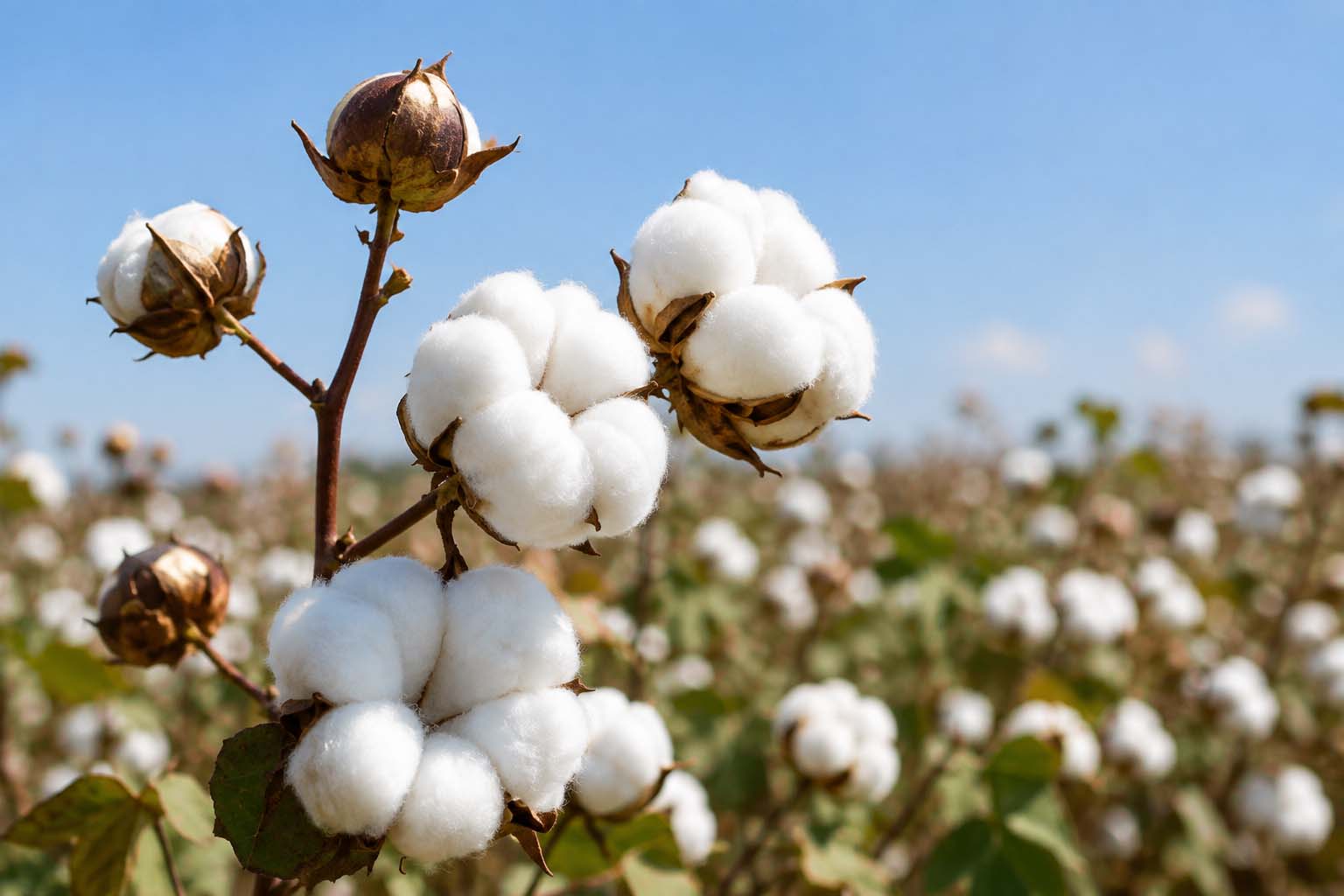
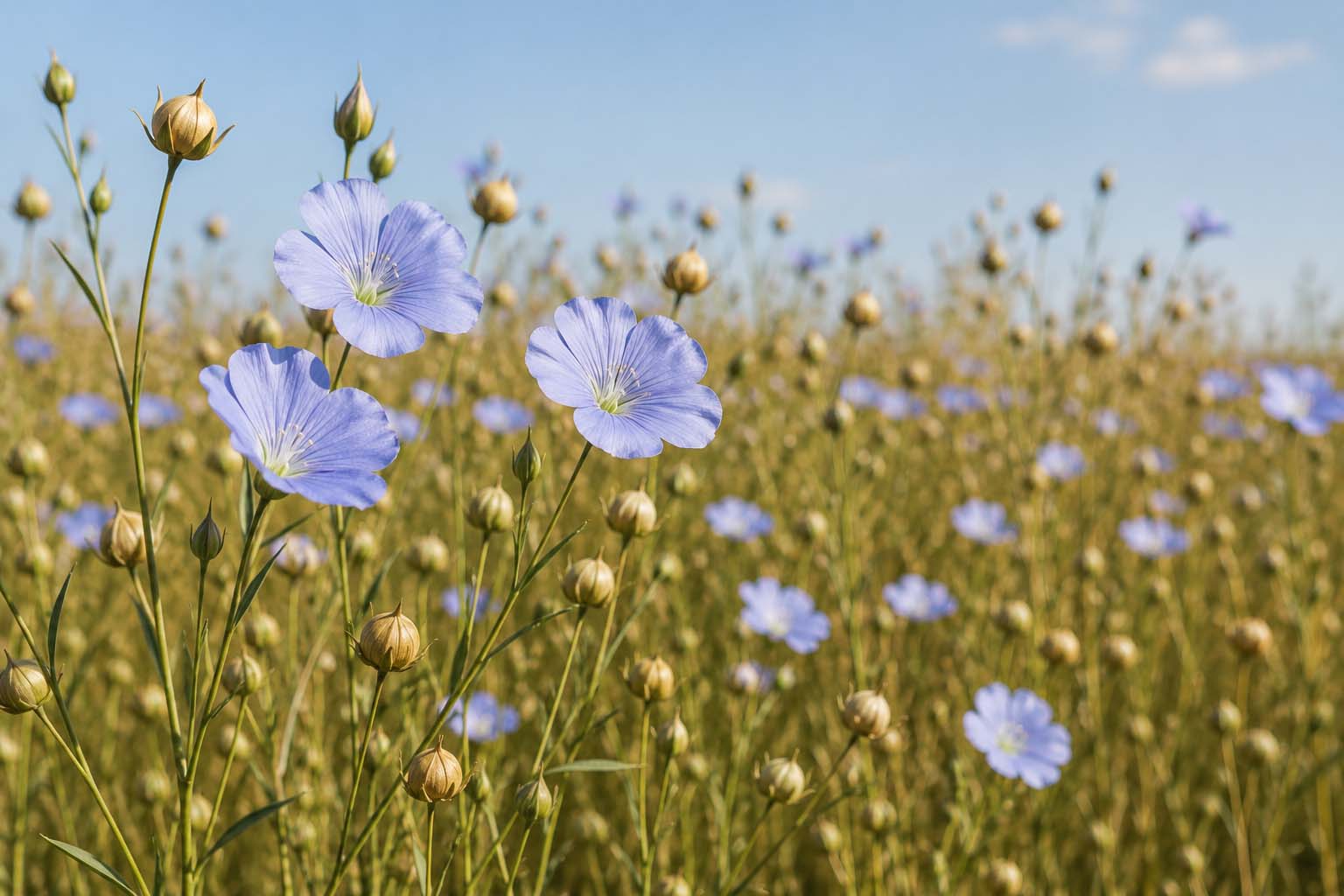
Cotton, viscose and linen can be alternatives to polyester depending on the application
or can be blended with it. They differ in areas such as feel, absorbency, creasing, care,
shape retention and appearance.
Natural plant-based fibre with a characteristic appearance and an often
cooler, drier feel.
Frequently asked questions
Polyester in brief
What is polyester?
Polyester is a synthetic fibre made from polymers and widely
used for both woven and knitted fabrics.
Is polyester a fabric?
Strictly speaking, polyester is a fibre rather than a specific type of fabric.
A wide variety of fabrics can be made from polyester.
Shrinkaget polyester?
Polyester is generally more shape-retaining and usually shrinks less than many natural fibres.
The exact response to washing and heat depends on the specific quality.
What is polyester used for?
Polyester is widely used in clothing, sportswear, linings, interior textiles,
outdoor products and technical fabrics.
Is 100% polyester always the same?
No. Two 100% polyester fabrics can differ considerably because of yarn type,
woven or knitted construction, weight, density, stretch and finish.
Is polyester breathable?
Polyester fibre itself absorbs little moisture. How airy or breathable a fabric feels
depends mainly on its construction, thickness and any functional finish.
Mutsaers Textiles uses cookies to improve your experience. By clicking “Accept”, you consent to the use of ALL the cookies. However you may visit Cookie Settings to provide a controlled consent.
Mutsaers TextilesAI Assistant
Search by:
How can I help? For example: I am looking for yellow jersey fabric.
 Custom fabrics
  Quantity discount
  Reorder easily