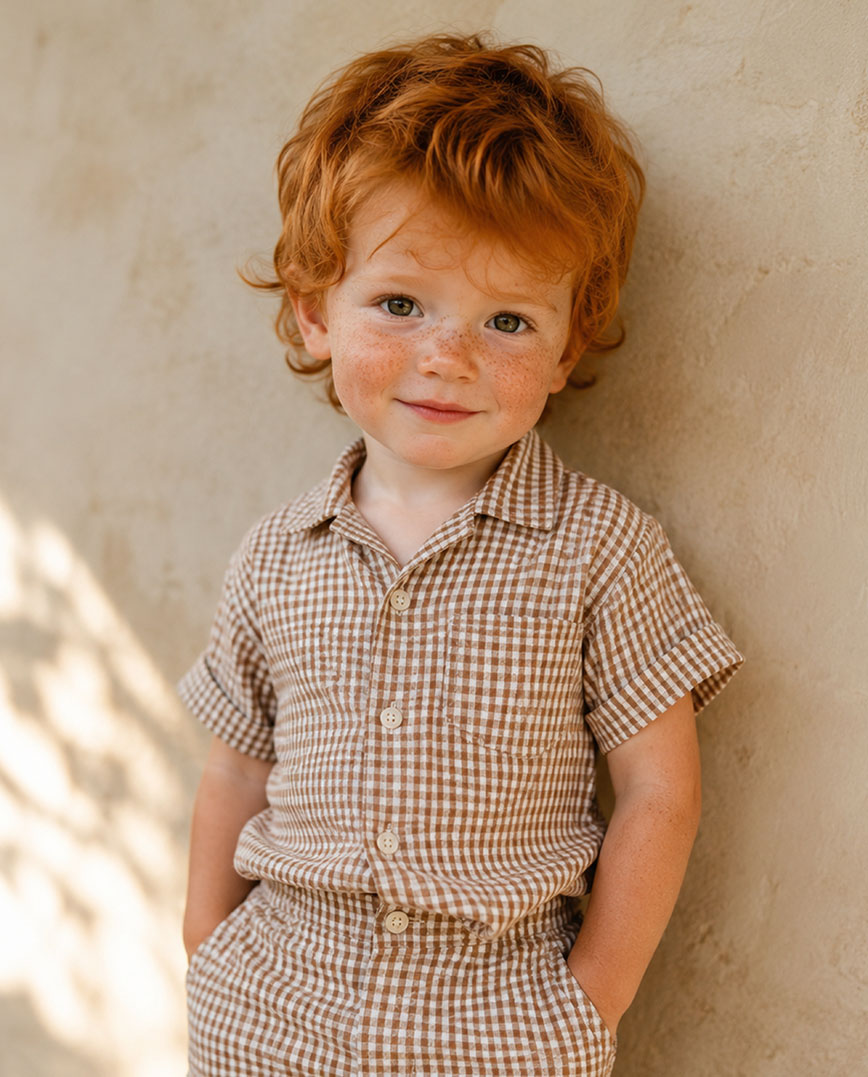
Seersucker is a woven fabric with a distinctive puckered or crinkled surface. This texture prevents the fabric from lying completely flat against the skin, helping it feel light and comfortable. It is widely used for summer clothing, blouses, dresses, shirts and childrenswear.
Seersucker is a woven fabric recognised by its alternating smooth and puckered surface. In traditional seersucker, this texture is created during weaving by varying the tension between groups of warp yarns. Some qualities achieve a similar textured effect through other production methods or finishes.
Seersucker does not have one fixed fibre composition. Many qualities are made from cotton, but polyester, viscose and various fibre blends are also used. Composition, weight and construction determine how lightweight, fluid, structured and easy-care a particular quality is.
Where does the name Seersucker come from?
The name seersucker has an unusual origin. The word entered English via Hindi and Urdu from the Persian shir-o-shakar, literally meaning “milk and sugar”. The name is traditionally associated with the contrast between the smoother and more puckered areas of the fabric.
Variations by Quality
Possible Variations
CompositionCotton, polyester, viscose or blends
TextureFrom subtle to pronounced
WeightUsually lightweight to medium-weight
StretchVaries by quality
Important: composition, texture, weight, stretch and care requirements can vary between seersucker qualities. Always check the specifications of the individual product.
Uses & Selection
What is Seersucker used for?
Dresses & SkirtsFor lightweight summer dresses and skirts where the distinctive texture adds a decorative effect.
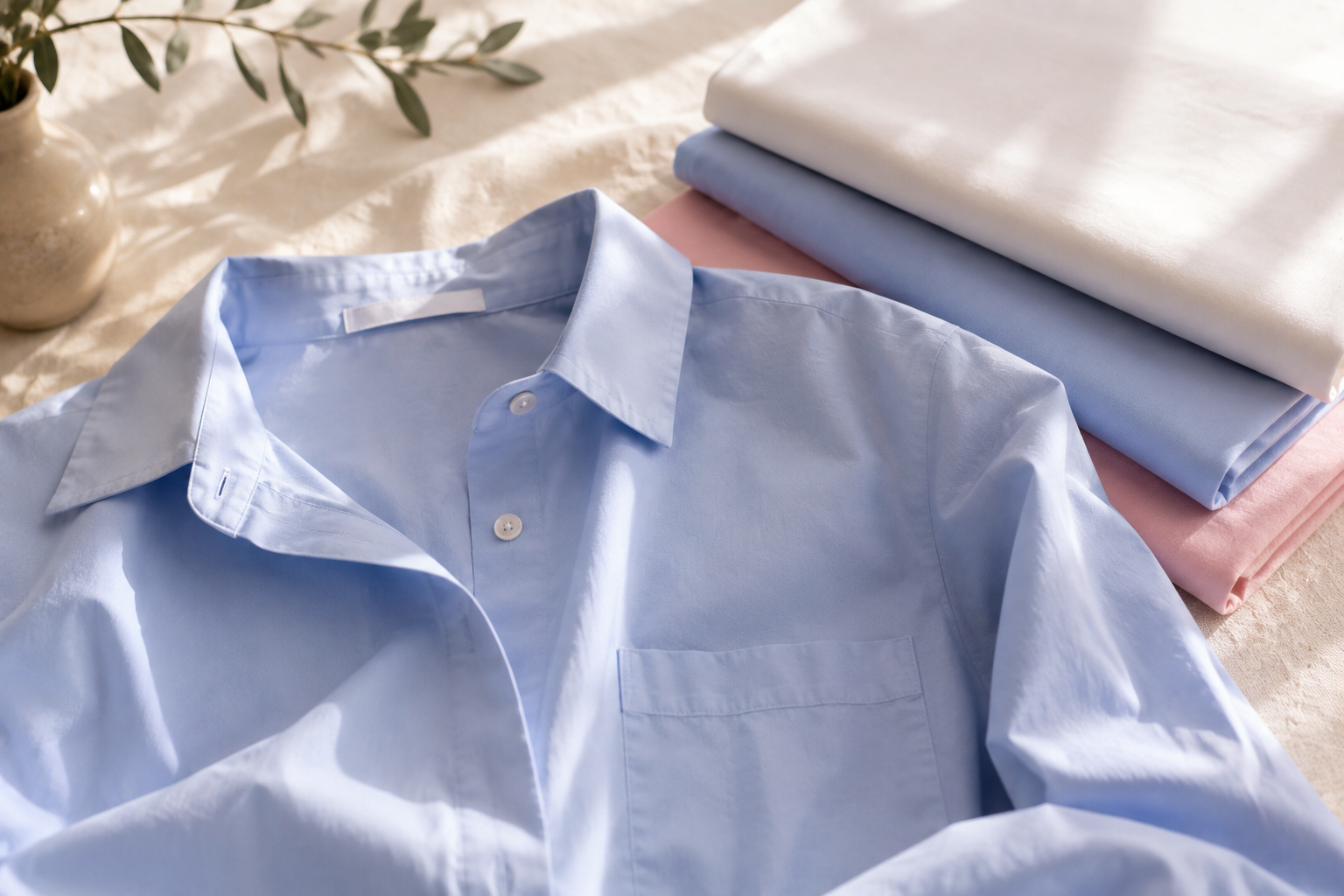
Blouses & ShirtsA classic choice for lightweight clothing with a comfortable, smart appearance.
Babywear & ChildrenswearSuitable for dresses, blouses, trousers and other lightweight garments, depending on the chosen quality.
Summer Sets & TrousersAlso suitable for shorts, lightweight trousers and two-piece sets when the fabric has sufficient body.
Choosing the right quality: pay particular attention to the scale of the texture, weight and drape. Fine, lightweight seersucker works well for blouses and dresses, while a slightly firmer quality gives more shape to trousers, shorts and shirts.
Care
Care Instructions
Pre-washingOften recommended before sewing for washable, cotton-rich qualities
WashingWash according to the instructions for the chosen quality
DryingPreferably air dry, or follow the individual product instructions
BleachingOnly when permitted by the individual product instructions
Good to Know
Sewing & Choosing
Pre-washingPre-washing can be advisable for washable, cotton-rich qualities. Always follow the care instructions for the individual product.
CuttingLay the fabric flat without stretching it and avoid flattening the puckered texture while measuring and cutting.
SewingChoose the needle and stitch length according to the fabric weight and composition, and test the settings on a scrap first.
FinishingFinish raw edges appropriately to reduce fraying without unnecessarily flattening the natural texture.
PressingThe puckered texture is a defining feature of seersucker, so avoid heavy pressing or trying to iron the fabric completely flat.
Choosing a QualityCompare composition, texture, weight, drape, stretch and care instructions for each seersucker quality.
Alternatives
Similar Fabrics
Cotton fabrics and poplin are useful alternatives for many of the same lightweight clothing applications, but they generally lack seersucker’s characteristic puckered texture.
A fine, smoothly woven alternative for shirts, blouses, dresses and lightweight clothing when a flatter surface is preferred.
Frequently Asked Questions
Seersucker FAQs
What is Seersucker?
Seersucker is a woven fabric with a distinctive puckered or crinkled surface. Its texture allows parts of the fabric to sit slightly away from the skin.
Is Seersucker always made from cotton?
No. Cotton seersucker is very common, but the fabric can also be made from polyester, viscose or various fibre blends.
Does Seersucker need ironing?
The puckered texture is part of seersucker’s characteristic appearance, so heavy pressing or ironing it completely flat is generally undesirable. Always follow the care instructions for the chosen quality.
What is Seersucker used for?
Seersucker is widely used for dresses, skirts, blouses, shirts, childrenswear, shorts and other lightweight summer clothing.
Collection
Looking to Buy Seersucker?
Explore the available seersucker qualities, colours, textures and current product specifications.
Mutsaers Textiles uses cookies to improve your experience. By clicking “Accept”, you consent to the use of ALL the cookies. However you may visit Cookie Settings to provide a controlled consent.
Mutsaers TextilesAI Assistant
Search by:
How can I help? For example: I am looking for yellow jersey fabric.
 Custom fabrics
  Quantity discount
  Reorder easily